


Green and environmental protection is becoming a trend, as rubber seal manufacturers actively embrace transformation.
Release date:
Jul 21,2023
Against the backdrop of growing global environmental awareness, the rubber sealing ring industry is also facing both the pressures and opportunities of a green transformation.

Green Trends Drive Transformation of Rubber Seal Companies
Under the guidance of the "dual carbon" goals and the wave of green transformation in global manufacturing, the rubber seal industry is undergoing profound changes. As critical basic components that prevent fluid leakage and ensure equipment operation, rubber seals are widely used in automotive, aerospace, petrochemical, and other fields. Today, driven by increasingly stringent environmental policies and evolving market demands, a green transformation encompassing raw material innovation and production process optimization is fully underway across rubber seal companies.
Dual Engines of Green Transformation: Policy and Market
China's policy environment for the rubber seal industry continues to guide companies towards green, high-quality development. Policies like the "Implementation Opinions on Enhancing the Reliability Level of the Manufacturing Industry" focus on improving the reliability of core basic components. Concurrently, the 2025 "Government Work Report" explicitly calls for accelerating the high-quality development of key industrial chains in manufacturing, charting the course for industry transformation. With environmental regulations tightening, green and eco-friendly rubber seal products are increasingly favored in the market. The weight of environmentally friendly materials in procurement costs for new energy vehicle seals is steadily rising.
Profound changes in downstream application sectors are the direct drivers of this transformation. The global new energy vehicle industry is rapidly developing, with China's new energy vehicle sales reaching 12.89 million units in 2024. New energy vehicles impose higher demands on battery pack sealing and electric drive system sealing, requiring not only excellent waterproof and dustproof performance but also lightweight and environmentally friendly attributes. Furthermore, the rise of high-end sectors like hydrogen energy equipment and semiconductor manufacturing has generated new demands for high-pressure resistant, corrosion-resistant, and high-purity seals.
Material Revolution: Embracing Green at the Source
Facing these challenges, rubber seal companies are accelerating the development and application of environmentally friendly materials, starting from the material source.
On one hand, bio-based and biodegradable materials are becoming a focal point of R&D. Global chemical giant Dow Inc. launched bio-based NORDEL™ REN EPDM in 2024, utilizing biological residues as feedstock through a mass balance system, delivering performance identical to virgin materials and helping automotive and other industries achieve decarbonization goals. Domestic companies are also actively participating. Jiangsu Hengxin New Material Technology Co., Ltd. showcased the world-leading GreenLytic bio-based biodegradable rubber, which boasts over 70% biodegradability in composting conditions within 110 days, is safe and non-toxic, and exhibits low-temperature resistance down to -60°C, making it particularly suitable for high-end applications like aerospace seals. Research teams from Shenyang University of Chemical Technology and South China University of Technology have also successfully prepared oil-resistant biodegradable bio-based thermoplastic vulcanizates (TPV), offering sustainable solutions for applications like automotive seals.
On the other hand, environmental optimization of traditional materials is progressing in parallel. Addressing potential odor and volatile organic compound (VOC) issues from automotive sealing strips, companies and research institutions are developing low-odor, low-VOC EPDM sealing strips through formulation optimization and improved processing techniques to enhance in-car air quality. Nanjing Dongrun Special Rubber Group's independently developed eco-friendly water gate rubber seals utilize environmentally friendly antioxidants instead of traditional materials, eliminating migration pollution and extending product life, earning a spot on Jiangsu Province's list of "New Technologies, New Products." Smart Manufacturing and Process Upgrades: Creating Green Productivity
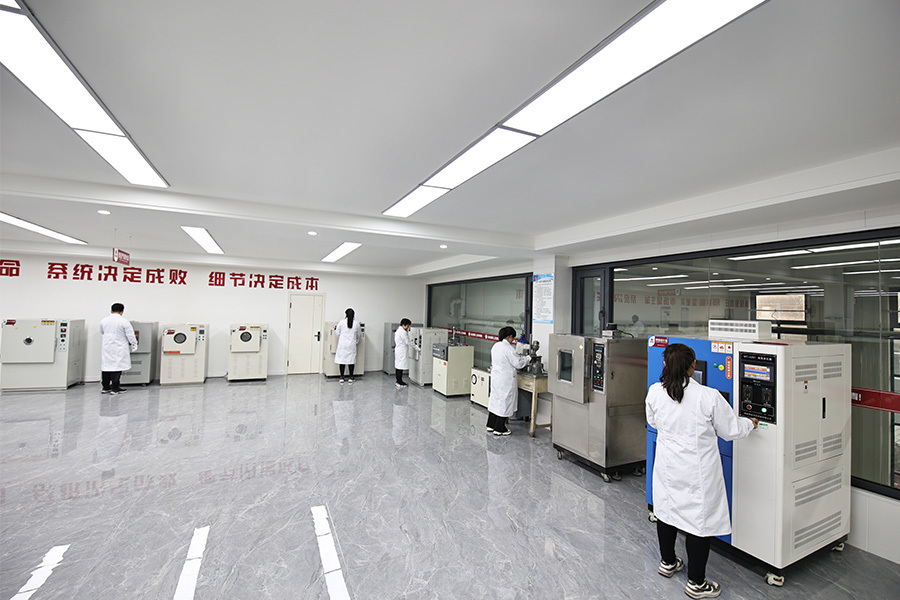
Green transformation isn't just about materials; it permeates the entire production process. An increasing number of companies are achieving energy savings, emission reductions, and quality improvements through smart manufacturing upgrades.
Nanjing Dongrun Group phased out traditional production lines and built pilot lines for new industrial products. Their new products have secured orders from leading industry players, boosting overall profit margins. In Qingdao, the penetration rate of automated production equipment in the seal industry has reached 75%, and coverage of digital quality inspection systems exceeds 90%. Leading companies have introduced AI-powered quality inspection, achieving a defect-free rate of up to 99.8%. 3D printing technology is also beginning to be applied for the one-shot forming of complex structure seals, challenging traditional molding processes.
Circular Economy: A New Path to Turn Waste into Treasure
The circular economy model is another significant direction for companies. Dawn Group, in partnership with Haier, focuses on the R&D and production of recycled plastics, enabling "recovery and reuse" of waste plastics through innovative technologies. Their recycled plastics boast an 80% reduction in carbon emissions per ton compared to virgin plastics, finding applications not only in home appliances but also expanding into automotive components. This technical approach, allowing waste materials to "rest deeply" and regain performance, provides a valuable reference for resource recycling within the sealing industry.
Cutting-Edge Exploration: Aiming for Future Demand
In future industries like hydrogen energy, frontier technology development for rubber seals is already quietly underway. Research indicates that for the stringent requirements of seals in high-pressure hydrogen storage systems, using bio-based plasticizers (e.g., epoxidized soybean oil) to replace traditional synthetic plasticizers can facilitate low-carbon manufacturing while maintaining stable sealing performance under high-pressure hydrogen environments. Furthermore, smart seals with integrated sensors are emerging, capable of real-time monitoring of pressure, temperature, and other parameters to provide leak warnings. They are projected to capture a significant share in the high-end market by 2030.
From material innovation to process upgrades, from smart manufacturing to the circular economy, the path of green transformation for rubber seal companies is continuously broadening. In this profound industrial change, only those companies that proactively embrace green principles and persistently pursue technological innovation will secure a competitive edge on the journey toward high-quality development, contributing Chinese wisdom and green solutions to the global manufacturing industry.
Keywords:
Recommended


Phone/WeChat:
Email: